
Searching the Durango Court Docket
There is no verified general docket-search portal for city cases in Durango. Work from the paper instead. The summons, citation, or latest notice names the issuing agency. It usually carries the appearance date too. From there, the Durango Municipal Court clerk can confirm the city docket, the case status, and the next court setting. The counter sits at City Hall, 949 East Second Avenue. The direct line is 970-375-5020.
Follow this route for a Durango docket search:
- Read the issuing agency on the citation. Durango Police, Fort Lewis College Police, and certain city animal-code matters can belong to Durango Municipal Court.
- Use the number, name, and date on the Durango notice when calling or visiting the municipal clerk.
- Ask the Durango clerk for the current setting and whether the desired item is a register entry, judgment docket entry, or filed record.
- If the issuing agency is State Patrol or the La Plata County Sheriff, move to the state court search instead of the Durango city system.
- Confirm a close Durango setting with the clerk before appearing, especially after a request to reschedule.
The office also takes email at municourt@durangoco.gov, with weekday counter hours from 7:30 a.m. to 4:30 p.m. A city payment portal can show a payment path. It is no substitute for the Durango register of actions or the clerk's current court calendar.
Durango Summonses and Court Routing
Check which police agency wrote the ticket. That name is the fastest routing clue. A summons from Durango Police or Fort Lewis College Police for a municipal-law violation stays in Durango Municipal Court, and certain La Plata County Animal Protection summonses under city law land there too. A Colorado State Patrol or La Plata County Sheriff citation works differently. Those state matters go to the Combined Courts, not City Hall.
Quick routing check: City agency and city-code charge point to Durango Municipal Court. State Patrol or Sheriff points to La Plata County Court.
Serious state felonies and civil suits skip the municipal docket as well. If the notice is unclear, give the Durango clerk the agency, the citation number, and the alleged violation. And if a state search comes up empty, treat that as a dead end, not proof. The Colorado statewide calendar does not replace the city record.
Durango Municipal Court Basics
Durango Municipal Court hears the city's traffic, parking, animal, code, and nontraffic violations filed under municipal law. General civil suits and state felonies are outside its jurisdiction. Presiding Judge Beth Padilla took office July 1, 2026. The court administrator and clerks keep the summons files, registers, fee and money records, and the court docket that notes judgments.
Durango City Code section 15-16 requires a register of actions and index, plus the judgment docket and financial records. The register summarizes a case event by event. A court docket or calendar tracks scheduled work, and a judgment docket records judgments. Ask the clerk for the exact product needed. A broad search may not return the underlying paper.
The official Durango Municipal Court page lays out the court's jurisdiction, contact route, mandatory appearances, and payment options.
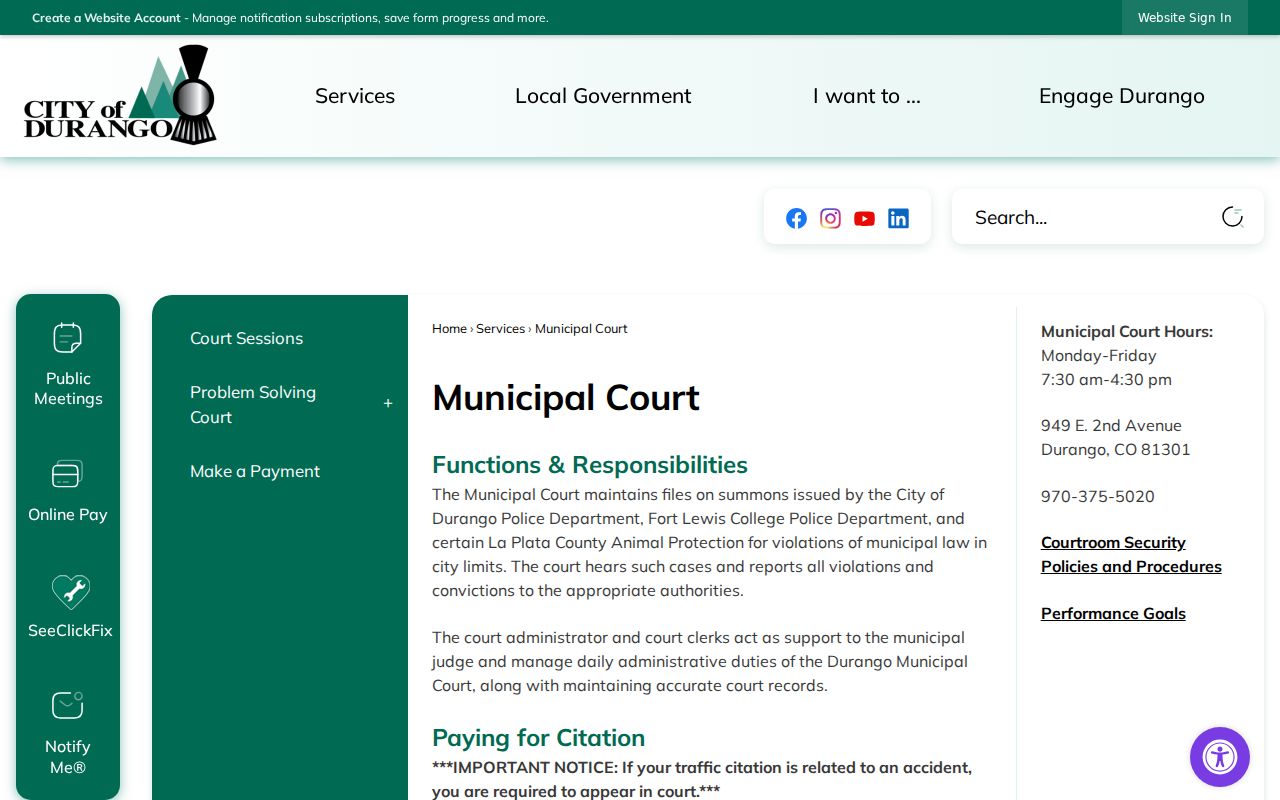
The city source keeps Durango procedure separate from the nearby state court system. That separation is the key to a reliable Durango docket search.
Durango Printed Docket Check-In
Check-in at City Hall runs off a printed docket. If your name is missing, go straight to the clerk window. You can be added or redirected there. Handle a missing name on the spot. It may signal a spelling issue, a late calendar change, a different hearing block, or a case routed to another court.
Bring the citation or notice, plus a case or citation number if one appears. Tell the clerk which agency issued it and the date you expected. Standing in the building or finding a payment record does not place a matter on the active Durango court docket. So ask the clerk whether to wait, come back, or fix a record mismatch. Weapons are prohibited, and City Hall uses a metal detector, so arrive early for the entry check and docket check-in. Court staff can explain procedure and records. They cannot advise on a plea or defense.
Court Dates and Settings in Durango
Beginning July 27, 2026, Durango court sessions run on Wednesdays and Thursdays. Arraignments start at 9 a.m. Trial dates depend on availability. Anyone hoping to reschedule an arraignment must call the Durango clerk to ask whether the request qualifies. Asking alone does not move the court date.
| Date | The day printed on the Durango notice or confirmed by the municipal clerk. |
|---|---|
| Time | The Durango calendar block, such as the 9 a.m. arraignment session, not a guaranteed individual start time. |
| Location | Durango City Hall at 949 East Second Avenue unless the court gives another approved instruction. |
| Judge | The presiding municipal judge or another authorized judicial officer assigned by Durango. |
| Setting type | Arraignment, juvenile docket, trial, compliance, problem-solving, or another city setting. |
The juvenile docket takes the first Wednesday at 1 p.m. Spanish interpretation is scheduled for the last Wednesday at 9 a.m. The clerk can arrange other languages on request. These blocks belong to the city court alone. Do not confuse them with La Plata County state settings.
Durango Court Docket History
Municipal judges served Durango as early as 1881. The present court dates to Ordinance 897, adopted January 22, 1957. That history explains why the city keeps its own municipal registers and public-official lists. Durango events are not folded into the Colorado Judicial Branch search. The Durango historical archive identifies a 32-page municipal-court case-record history. It also holds lists of public officials.
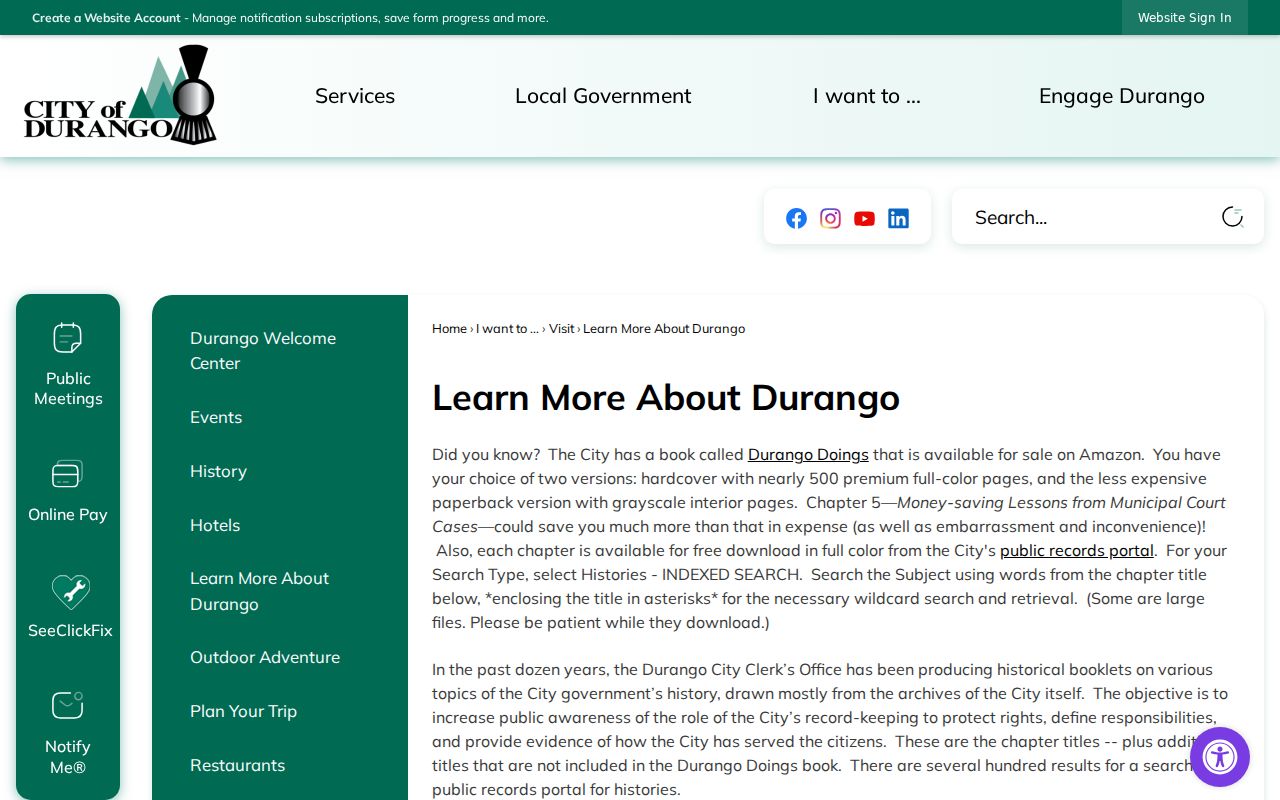
The archive adds useful historical context. Current Durango court dates and active case records still come from the municipal clerk, though. Treat the historical material as background only, since a live summons can change status no matter what the older docket entries suggest.
Traffic Tickets in Durango
A ticket from Durango Police or Fort Lewis College Police is a city matter. It runs on the Durango municipal track. The response deadline printed on the citation is the one that counts. The city gives you choices: mail a check or money order, pay at the counter, or pay online through Quicket when the charge qualifies. You can also show up in person and talk with the City Prosecutor. Some charges, though, demand an appearance and can't be settled online. Documented categories include accident-related citations, reckless driving, eluding, and speed contest. Also listed are serious careless-driving allegations and major speeding allegations. License-related charges, certain state-law counterparts, and nontraffic offenses round out the list. Read your citation and check with the Durango clerk before choosing a path. The official Durango online court payment page opens the city's payment route. It warns users to keep municipal obligations separate from county citations.
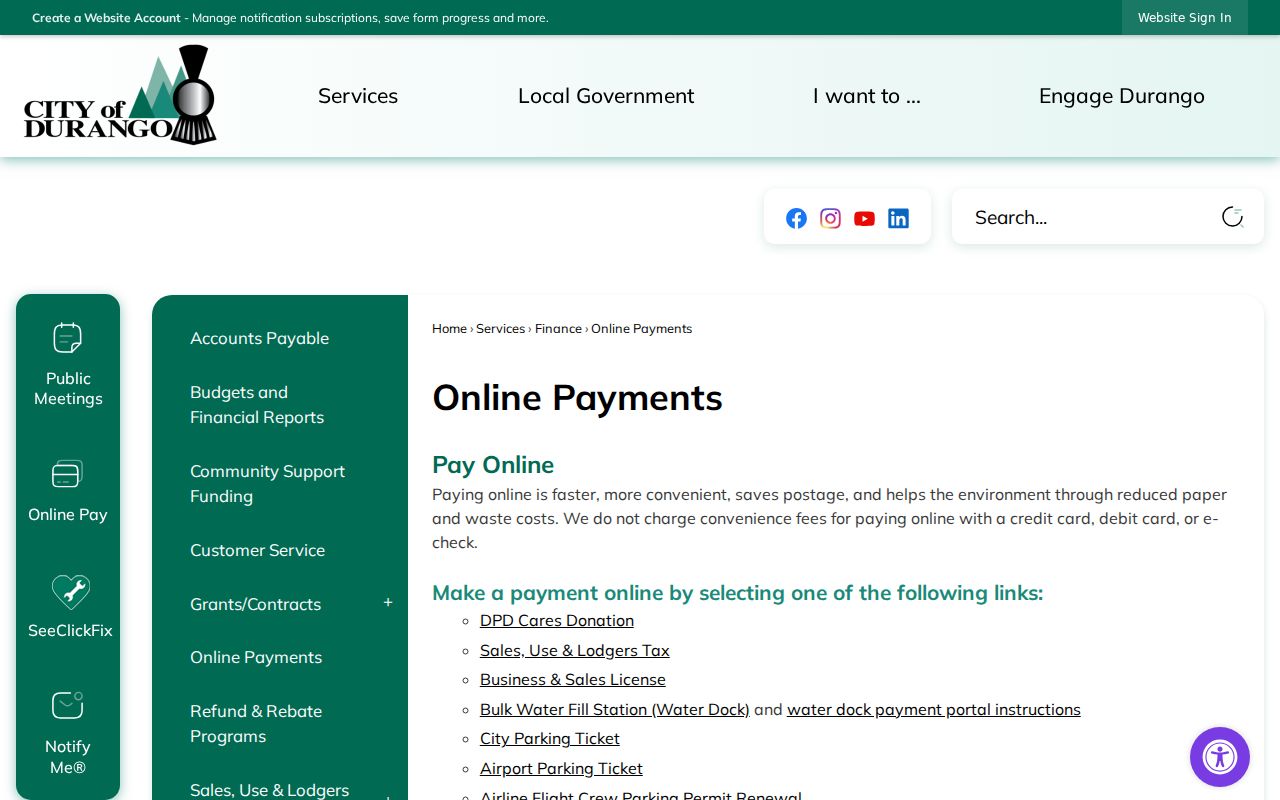
That payment screen is a way to pay a fine, not a Durango docket viewer. State Patrol and Sheriff tickets go through Combined Courts instead.
Durango Quicket and Court Pleas
Paying online is not a neutral lookup. Durango treats a Quicket payment as a guilty plea to every charge you select. Wanting to contest the ticket, seek a deferred sentence, or work out a plea bargain means the payment screen won't hold the case open for you. It resolves it.
| Durango choice | What it does | Next check |
|---|---|---|
| Eligible online payment | Enters a guilty plea through the payment process | Confirm the citation is municipal and eligible |
| Appear and contest | Keeps the matter for court handling | Use the date on the Durango citation |
| Ask about a deferred sentence | Starts a case-specific discussion, not an automatic benefit | Meet the City Prosecutor at arraignment |
The city doesn't publish the Quicket search-field labels, so don't guess at a citation format. Guessing won't cure a missed appearance either. If a mandatory court date slipped by, call the Durango clerk right away for the case status and current instruction.
Where Durango Cases Go
Durango municipal violations stay at City Hall. Under Colorado law, a misdemeanor or state traffic case belongs in La Plata County Court. A state felony goes to the Sixth Judicial District Court, though an early felony stage can show up first in County Court. Civil, domestic, juvenile, and probate matters also bypass the Durango municipal docket entirely. They use the proper state trial division.
Docket flow: Durango Municipal Court › La Plata County Court › Sixth Judicial District Court
Think of this as routing help, not an appeal path. City summons records start with the Durango clerk. State hearings show up in the Colorado Judicial Branch Docket Search. The Combined Courts clerk can supply a state Register of Action or document. The county-wide La Plata County court docket covers the state-court route. So this Durango page stays city-focused.
Durango Problem Solving Court Docket
Durango runs a municipal Problem Solving Court. It serves people facing homelessness, substance dependency, or mental-health barriers in low-level city cases. Once accepted, Durango and community partners build casework around the conditions tied to the charge. The participant reports progress and support needs at court appearances. The program still sits inside Durango Municipal Court. It is not the Sixth Judicial District Adult Drug Court or Behavioral Health Court. It also doesn't create a separate statewide public docket portal. Ask the Durango clerk how a program appearance is labeled in the city record. Ask which date controls, too. That keeps the lookup tied to the underlying Durango summons. Don't infer participation from a generic calendar entry. Use the Durango register and the court's direct instruction for the actual case.
Durango Court Record Access Rules
The city court administrator and clerks keep the Durango municipal records. Request the register of actions, judgment docket entry, summons file, or any other named record straight from the Municipal Court. The counter offers an in-person channel. Staff will direct you. A clear request speeds things up: give the name, the citation or case number if known, an approximate date, and the exact record you want. The official Durango Municipal Court directory lists the staff. It also gives direct contact routes for a record request.
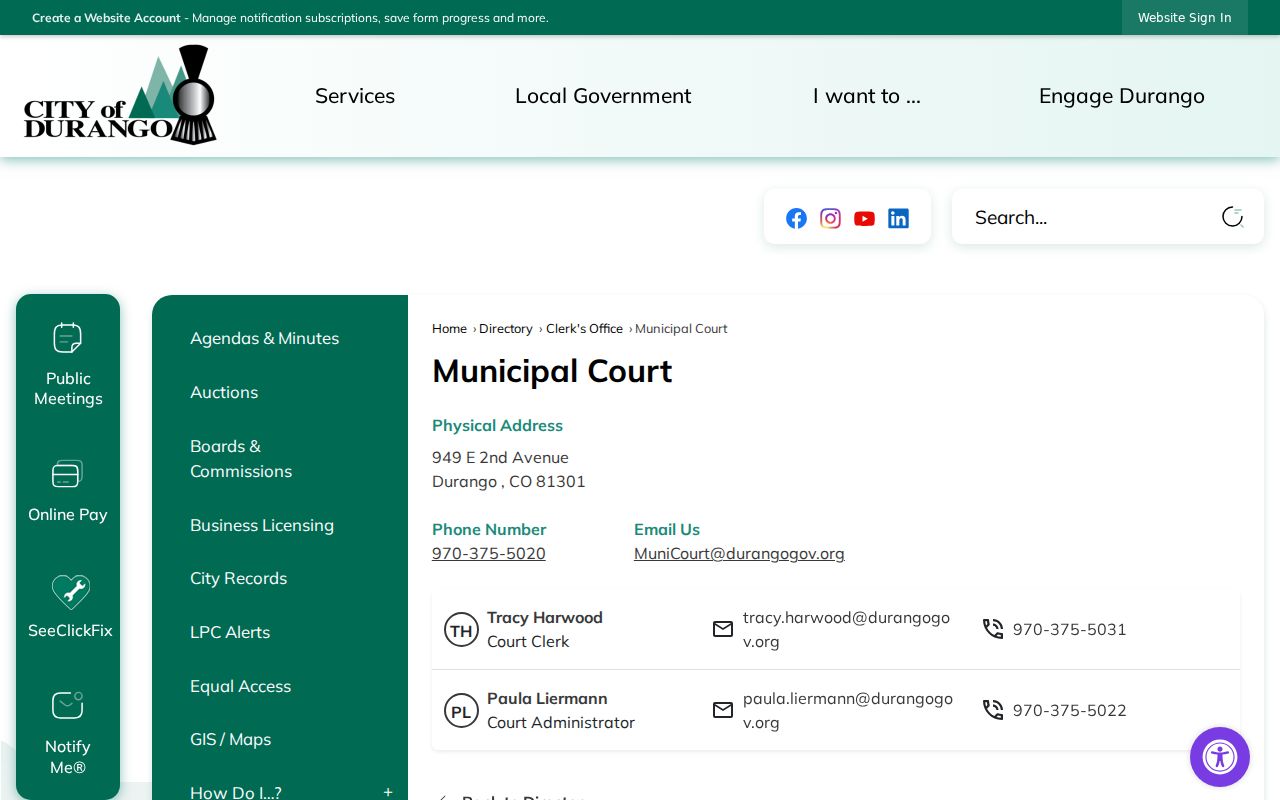
The directory gives you direct city access, since Durango offers no broad online docket search. Restricted information may be withheld or redacted under law, rule, or court order.
Access rules:
Colorado Open Records Act governs many city public records, subject to statutory exceptions.
Chief Justice Directive 05-01 governs state court case-record access and helps explain why a state file follows a different process.
Durango Docket Retention Windows
How long a Durango record lasts depends on what it is. Municipal indexes and registers are kept for four years. Deferred-sentence indexes are kept for six months after the case closes and appeal rights end. Warrant indexes run six months. Certain search-warrant files last four years after closure or recall. An older Durango search may therefore need a sharper request. It may land in the city archive rather than the active clerk file. Give the clerk an approximate year, party name, issuing agency, and record type. Then ask whether the active office, retained municipal file, or archive holds the item. A Durango Municipal Court judgment can also be appealed. Durango code treats the court as a court of record. The appeal therefore moves on the existing record to District Court under the applicable municipal-appeal process. The judgment and current notice set the deadline and filing steps. Get the record designation and appeal instructions from the clerk. Do not rely on a general summary.